Reviews of The Metamodern
Collectively, these reviews are my attempt to paint a picture of the new philosophy. Metamodernism, oscillates between sincerity and irony, structure, and freedom, abstraction, and representation. The figure in the machine. This compilation is a personal archive and a public offering to the contemporary cultural discourse, I wrote this specifically for artists, critics and anyone interested in the evolving conversation around painting and culture in Canada.
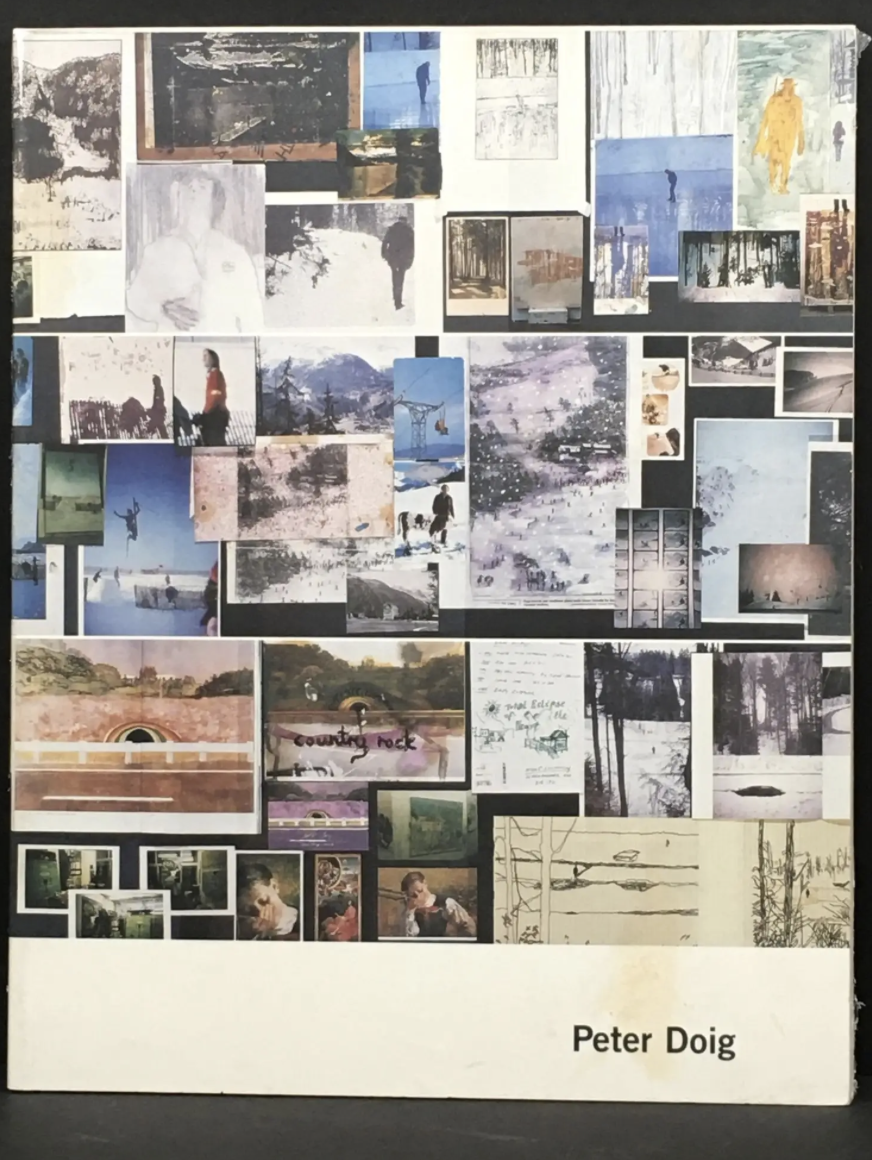
Peter Doig at The Power Plant, Toronto (2001–2002) Peter Doig’s exhibition Almost Grown (December 8, 2001 – March 3, 2002) at The Power Plant Contemporary Art Gallery was a landmark presentation in early-2000s Toronto. Coming at a moment when Doig was gaining major international momentum, this show introduced many Canadian viewers to the full seductive power of his work and proved deeply influential on a generation of painters. The exhibition featured Doig’s signature large-scale canvases and works on paper, including key pieces from his snowy landscapes, architectural scenes, and early Trinidad-influenced works. Viewers encountered his distinctive blend of photographic memory, cinematic atmosphere, and painterly materiality, scenes that feel both familiar and strangely dislocated, as if pulled from half-remembered films or childhood dreams.Like Roald Nasgaard’s Gerhard Richter survey at the AGO, the Power Plant show demonstrated the continued vitality and complexity of ambitious painting at a time when much contemporary art was moving toward installation and new media. Doig’s ability to evoke mood, place, and psychological undercurrents through lush, layered paint made a strong case for painting’s enduring relevance. The exhibition’s impact extended beyond its run. It helped solidify Doig’s reputation in Canada (where he spent part of his childhood) and inspired younger artists to explore landscape, figuration, and narrative within contemporary abstraction. The Power Plant’s raw industrial spaces provided a perfect counterpoint to Doig’s atmospheric imagery, heightening the dreamlike tension in the work. In retrospect, Almost Grown stands as one of the most important painting-focused exhibitions in Toronto in the 2000s — a moment when a major public gallery fully committed to an artist whose work was redefining what contemporary painting could be.
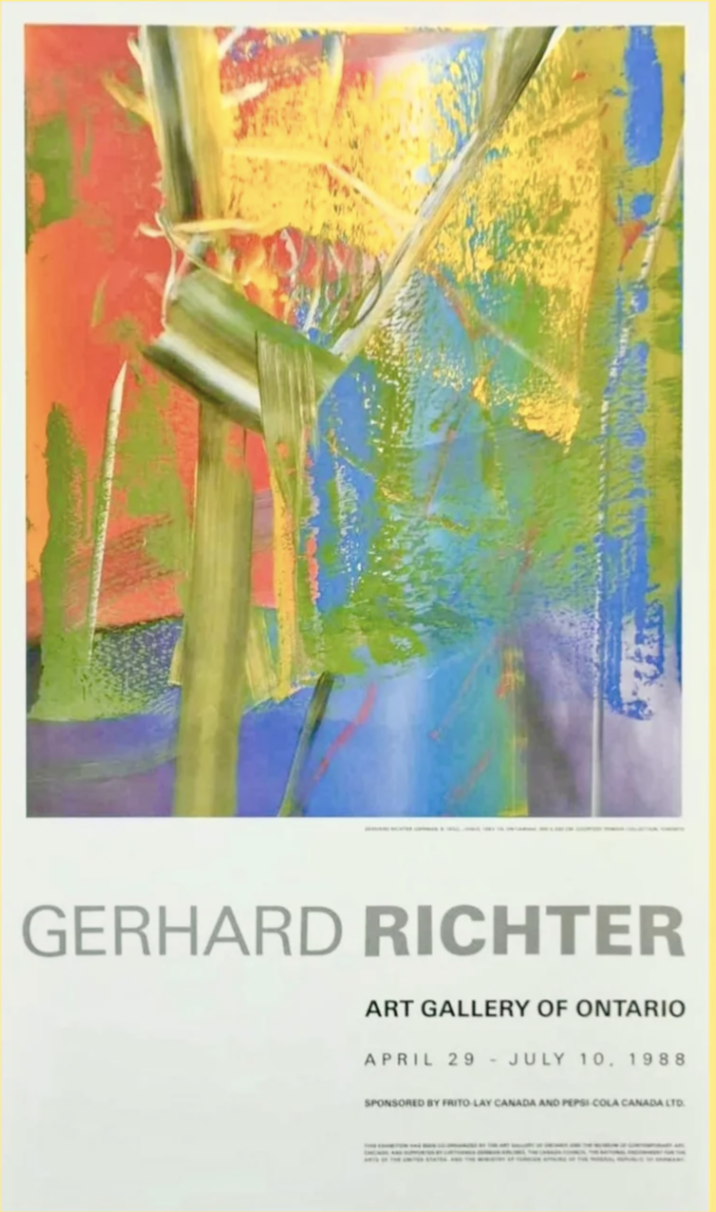
The Crisis of Self-Critique in Postmodernism: Fragmentation into Institutionalized Identity Ontologies. Postmodernism emerged in the late 20th century as a radical critique of modernism’s faith in progress, universal reason, and grand narratives. Thinkers like Jean-François Lyotard declared “incredulity toward metanarratives,” while Jacques Derrida’s deconstruction and Michel Foucault’s analyses of power/knowledge exposed how knowledge and representation were always entangled with domination. This skeptical, pluralistic stance celebrated fragmentation, irony, pastiche, and the dissolution of stable identities and meanings. In art, it manifested in appropriation, simulation, and the blurring of high and low culture. Yet postmodernism contained the seeds of its own crisis. Its core tools — relentless suspicion, relativism, and the rejection of foundational truths — proved difficult to contain once turned inward. When critical theory’s own methods of interrogation were applied to postmodernism itself, the framework struggled to withstand the scrutiny. If all narratives are constructed and power-laden, then postmodernism’s celebration of difference and pluralism could itself be read as a new form of ideology, one that sometimes masked material inequalities or enabled the very consumerist late capitalism it claimed to critique (as Fredric Jameson famously argued). This self-reflexive pressure accelerated in the 1980s and 1990s through the rise of postcolonial theory, queer theory, critical race theory, and intersectional feminism. These approaches, deeply indebted to postmodern and post-structuralist thought, demanded greater attention to specific histories of oppression and the material conditions of identity. Postmodernism’s fluid, decentered subject began to appear insufficiently attentive to the concrete experiences of marginalized groups. Relativism, once liberating, risked undermining claims to justice by suggesting that all positions were equally constructed. The result was a fragmentation of the postmodern project. Broad cultural pluralism gave way to more tightly defined identity-based ontologies — frameworks in which identity (racial, gendered, sexual, national, or otherwise) became the primary lens for understanding both art and society. In the art world, this shift was particularly visible. The playful, deconstructive strategies of early postmodernism were increasingly replaced by practices organized around identity categories. Curatorial programs, academic departments, funding bodies, and museums institutionalized these ontologies, creating dedicated spaces, discourses, and criteria for “identity art.” What began as a critique of essentialism sometimes hardened into new forms of essentialism or strategic essentialism, now backed by institutional authority.This institutionalization had paradoxical effects. On one hand, it brought long-excluded voices and histories into the center of cultural discourse, enriching the field immeasurably. On the other, it risked replacing one set of totalizing frameworks with another — now organized around competing identity claims rather than class, nation, or universal humanism. The self-critique that postmodernism invited ultimately helped dismantle its own more open-ended pluralism, channeling critical energy into more bounded, administrable, and institutionally legible forms. In this sense, postmodernism did not simply “end.” It underwent an internal crisis of self-review that fragmented its legacy into the identity-centered paradigms that continue to shape much of contemporary cultural production and institutional life today.
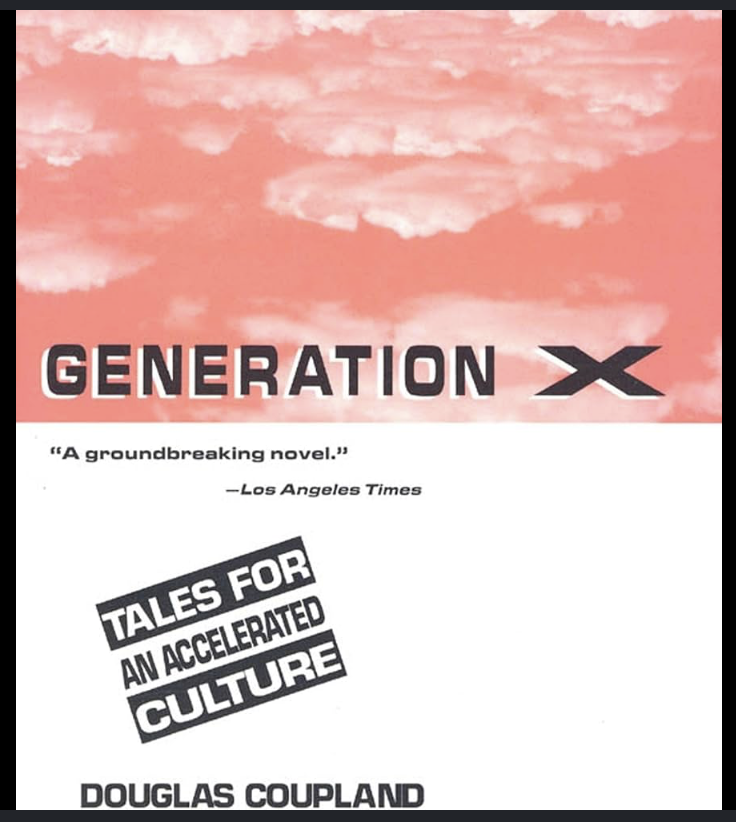
Generation X: Tales for an Accelerated Culture by Douglas Coupland
St. Martin’s Press, 1991. Douglas Coupland’s Generation X didn’t just name a generation — it captured its nervous system. Published in 1991, this sharp, sardonic novel became the definitive portrait of the cohort caught between Baby Boomers and Millennials: educated, ironic, underemployed, and deeply skeptical of the consumer paradise they inherited. Framed as a series of interconnected stories told by three twentysomethings who have fled mainstream careers for dead-end jobs in Palm Springs, the book blends fiction, aphorisms, cartoons, and “found” cultural detritus. Coupland’s characters — Andy, Claire, and Dag — practice “knee-jerk irony” and “McJobs” while telling each other stories as a form of survival. They are refugees from the Baby Boom’s grand narratives of progress, trapped in a world of hyper-consumerism, environmental dread, and media saturation. What makes the book enduring is Coupland’s ability to diagnose the era’s spiritual malaise with humor and precision. He coins or popularizes terms like “Generation X,” “McJob,” “bling,” and “paradigm shift,” giving language to a group that felt it had inherited a bankrupt culture. The novel’s fragmented structure mirrors its theme: life under late capitalism feels like channel-surfing — fast, disconnected, and strangely empty. Thirty-five years later, Generation X reads as both time capsule and prophecy. The slacker irony, anxiety about the future, and rejection of corporate ladder-climbing feel remarkably contemporary. Coupland understood that his generation’s defining trait was not apathy but a hyper-aware exhaustion — a sense that the grand stories were over and all that remained was to narrate the wreckage with style. Flawed in places (its characters can feel like mouthpieces), the book is still brilliant cultural criticism disguised as fiction. For anyone wanting to understand the roots of modern irony, precarity, and generational self-awareness, Generation X remains essential reading.
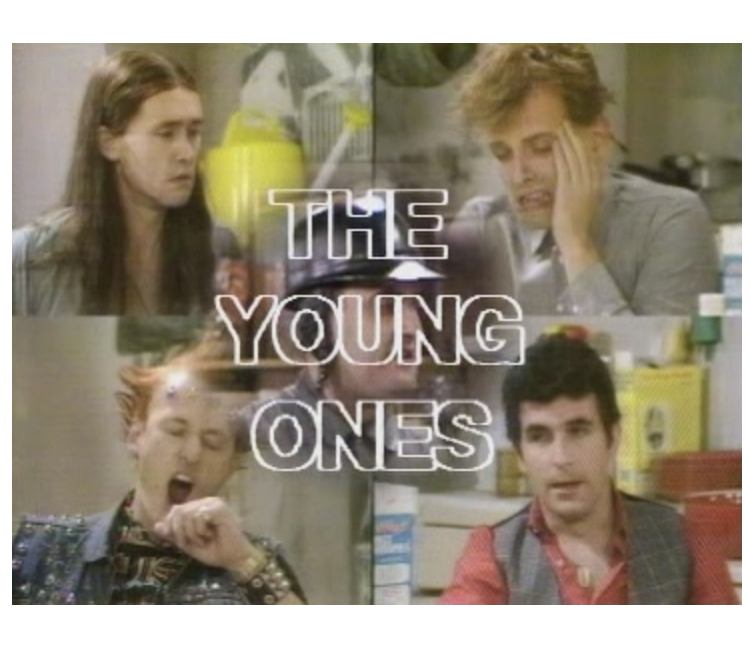
The Crisis Dissolves into Spectacle: The Young Ones and the Pervasive Crisis of the 1980s. In the British cult sitcom The Young Ones (1982–1984), the crisis of the era does not resolve — it explodes into anarchic spectacle. Created by Rik Mayall, Ben Elton, and Lise Mayer, the series captures the pervasive sense of cultural, political, and existential crisis in Thatcher-era Britain and channels it into something gloriously absurd. Economic collapse, nuclear anxiety, youth unemployment, and the collapse of traditional authority structures are not analyzed or mourned; they are detonated into slapstick chaos, surreal violence, and fourth-wall-shattering nonsense. The four housemates — Rik (the pompous anarchist poet), Vyvyan (the psychotic punk), Neil (the depressed hippie), and Mike (the self-proclaimed “cool person”) — embody fragmented responses to a world in breakdown. Their squalid student house becomes a microcosm of a society where meaning itself has collapsed. Yet rather than despair, the show transforms crisis into spectacle. A simple trip to the corner shop turns into a post-apocalyptic wasteland. A quiet evening descends into a full-scale riot complete with talking rats and exploding furniture. The crisis is so total that it ceases to be tragic and becomes carnivalesque entertainment. This dissipation of crisis into spectacle is the show’s sharpest insight. In an age of mass unemployment, looming nuclear war, and crumbling welfare states, The Young Ones refuses solemnity. It recognizes that when crisis becomes permanent and all-encompassing, the only sane response is manic absurdity. The laughter is not escapist but diagnostic — it reveals how late-20th-century culture processes trauma through exaggeration, repetition, and ironic detachment.The series stands as a perfect cultural artefact of its moment: the crisis of abstraction, authority, and meaning that Denise Leclerc identified in 1950s painting has, by the 1980s, infected everyday life. In The Young Ones, that crisis no longer needs resolution. It has become the entertainment itself — loud, violent, hilarious, and strangely liberating.
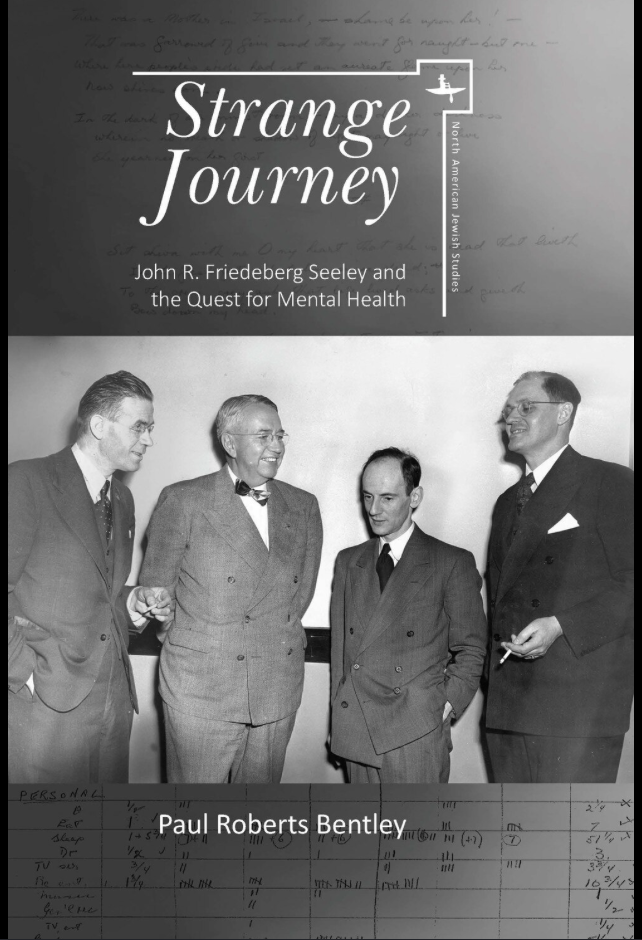
Strange Journey: John R. Friedeberg Seeley and the Quest for Mental Health by Paul Roberts Bentley
Academic Studies Press, 2020. Paul Roberts Bentley’s Strange Journey is a compelling, often unsettling biography of John R. Friedeberg Seeley (1913–2007), one of the most influential yet enigmatic figures in postwar North American social science. As a sociologist, educator, and mental health activist, Seeley played a central role in shaping early mental health policy in Canada and the United States. Bentley traces his subject’s path from privileged European-Jewish roots through an iconoclastic academic career that blended rigorous sociology with visionary (and sometimes reckless) social experimentation. The book’s greatest strength lies in its nuanced treatment of the intersection between Seeley’s intellectual work and his personal struggles. Seeley championed progressive causes — community mental health, progressive education, and critiques of institutional power — while his own life was marked by psychological turmoil, controversial personal choices, and a restless search for authenticity. Bentley handles this complexity with scholarly integrity and empathy, avoiding both hagiography and sensationalism. A particularly fascinating thread is Seeley’s time at York University in Toronto. It was here, in the late 1960s and 1970s, that the MFA (Master of Fine Arts) program and the Department of Sociology found fertile — if sometimes volatile — ground for interdisciplinary dialogue. York became a place where artistic practice and sociological inquiry met, reflecting Seeley’s belief that understanding the human condition required both empirical analysis and creative imagination. Bentley shows how this environment amplified Seeley’s influence while exposing the tensions inherent in his holistic, boundary-crossing approach. Strange Journey is more than a standard academic biography. It is a meditation on the blurred lines between genius and instability, idealism and hubris. Bentley’s clear prose and thoughtful analysis make the book accessible beyond specialist circles. For anyone interested in the history of sociology, mental health reform, or the intellectual culture of postwar Canada, this is essential reading — a portrait of a brilliant, flawed man whose ideas continue to challenge how we think about mind, society, and the pursuit of well-being.
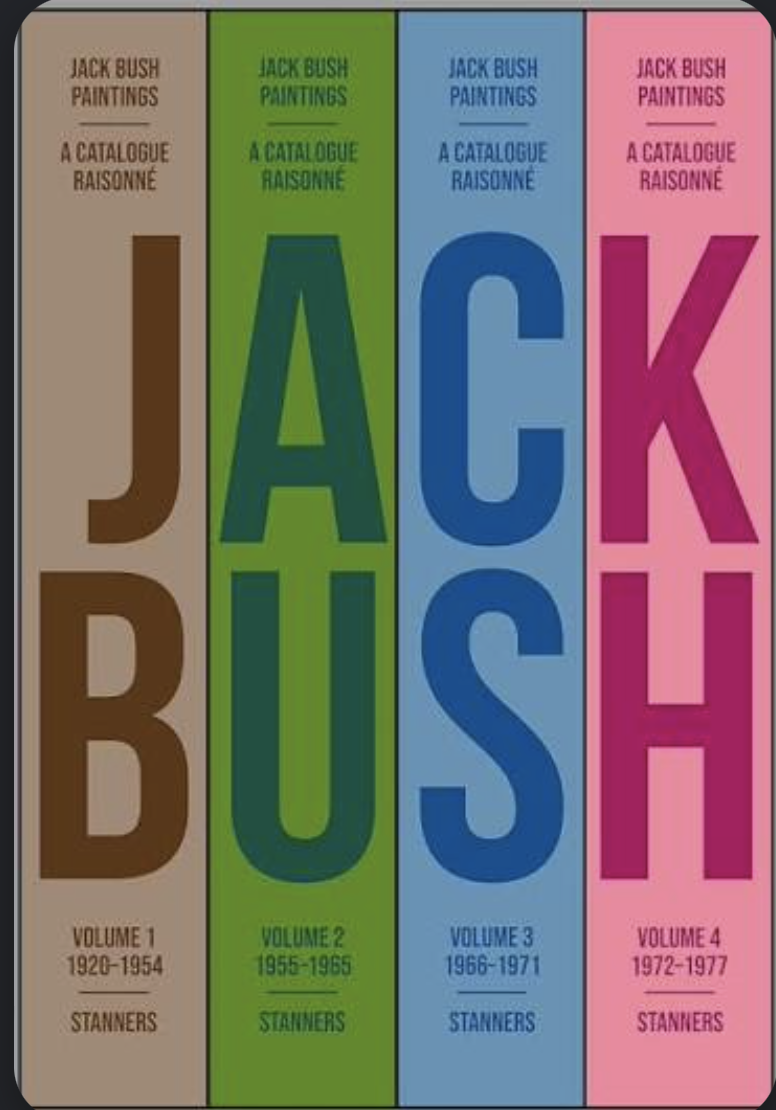
Jack Bush Paintings: A Catalogue Raisonné by Sarah Stanners
David Mirvish Books / Coach House Press, 2024 (4 volumes) Sarah Stanners’ monumental Jack Bush Paintings: A Catalogue Raisonné (2024) is a landmark achievement in Canadian art scholarship. Spanning four elegantly designed, cloth-bound volumes and documenting 1,850 paintings across six decades, this publication instantly becomes the definitive resource on one of Canada’s most important colourists. Stanners, who directed the project for over a decade, brings rigorous scholarship and deep visual sensitivity to Bush’s oeuvre. The catalogue raisonné meticulously records every known painting with high-quality reproductions, provenance, exhibition history, and detailed entries. What elevates the set beyond a standard reference is the accompanying critical apparatus: insightful essays by Stanners herself, Michael Fried, Karen Wilkin, and others that situate Bush within both Canadian and international contexts. The publication traces Bush’s evolution from his early figurative and landscape works through his pivotal involvement with Painters Eleven to the radiant, mature abstractions of the 1960s and 70s for which he is best known. Stanners is particularly adept at showing how Bush’s commercial design background informed his masterful sense of colour, composition, and graphic clarity. His bold, flat colour planes and intuitive structures never feel decorative; they pulse with emotional and perceptual intelligence. For the National Gallery of Canada and institutions like the Museum of Modern Art — both of which hold significant Bush works — this catalogue raisonné offers an indispensable tool for research, conservation, and exhibition planning. Its sheer scale and production quality match the ambition of Bush’s own career, which helped shift Canadian art toward a confident, colour-driven modernism. Visually sumptuous and academically authoritative, Jack Bush Paintings: A Catalogue Raisonné is far more than a reference work. It is a celebration of an artist who found profound poetry in colour and structure, and a major contribution to the study of postwar abstraction in North America. Essential for any serious art library or collector of Canadian modernism.
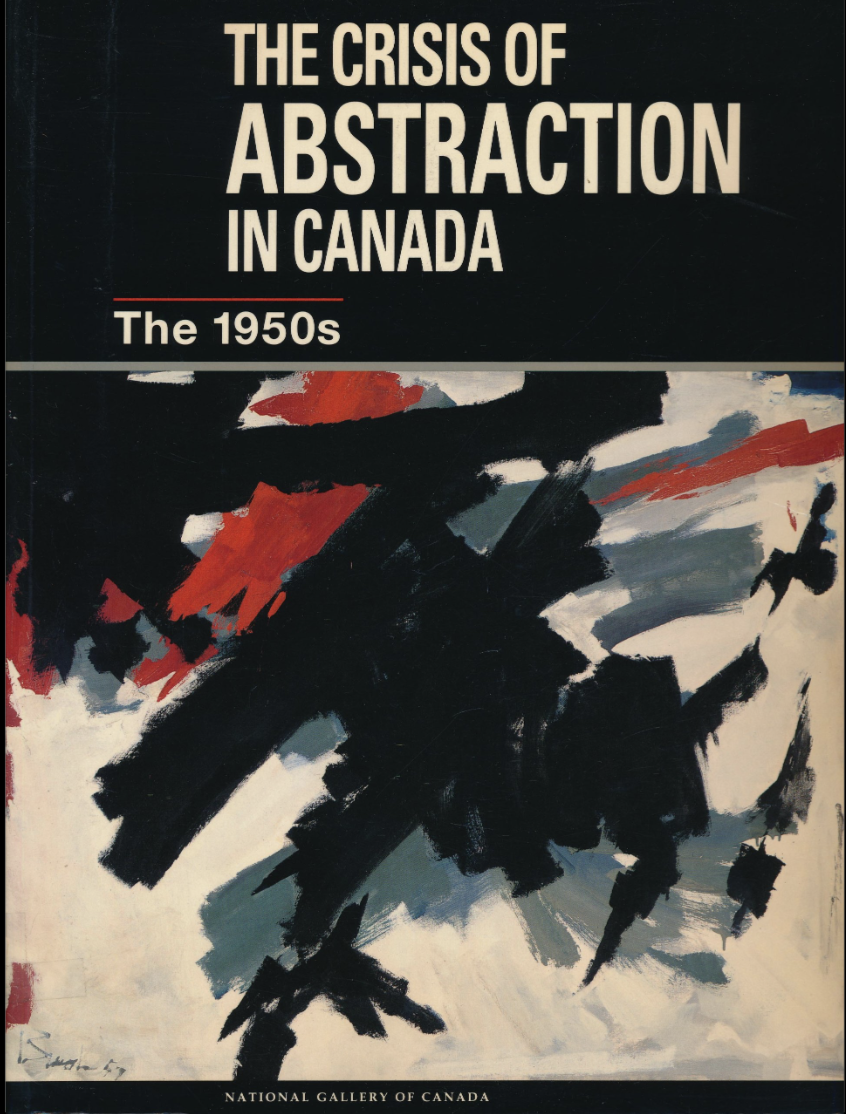
The Crisis of Abstraction in Canada: The 1950s by Denise Leclerc
National Gallery of Canada, 1992. (Exhibition Catalogue) Denise Leclerc’s The Crisis of Abstraction in Canada: The 1950s remains an essential document of postwar Canadian art. Published to accompany the National Gallery of Canada’s landmark travelling exhibition, the book captures a decade of profound artistic upheaval. As figurative traditions clashed with the urgent pull of international modernism, Canadian painters confronted what Leclerc aptly terms a “crisis” — not merely stylistic, but ideological, institutional, and deeply personal. Leclerc deftly maps the tension between the Group of Seven’s lingering nationalist landscape ethos and the radical experiments of the Automatists in Quebec and Painters Eleven in Ontario. Central figures such as Paul-Émile Borduas, Jean Paul Riopelle, Jack Bush, William Ronald, and Harold Town emerge not as isolated geniuses but as participants in a volatile national conversation. The book excels at showing how abstraction was never a purely formal choice: it carried political weight in the Cold War era, intersecting with debates over autonomy, American influence, and cultural identity. Visually, the catalogue is generous, reproducing key works alongside rarely seen sketches, manifestos, and installation shots. Leclerc’s text balances scholarly rigour with accessible narrative, making complex aesthetic debates feel urgent. Particularly strong are the sections on the Regina Five and the institutional resistance many abstract artists faced from conservative galleries and critics. Nearly thirty-five years after publication, the book still feels vital. It refuses to romanticize the period, acknowledging the personal costs — isolation, financial hardship, and bitter rivalries — that accompanied the march toward abstraction. For contemporary readers, it offers a nuanced model for understanding how artists navigate moments of cultural transition. The Crisis of Abstraction in Canada is more than a historical record; it is a thoughtful meditation on artistic courage and the messy, exhilarating process of cultural change. Essential reading for anyone interested in Canadian modernism or the broader story of postwar abstraction.
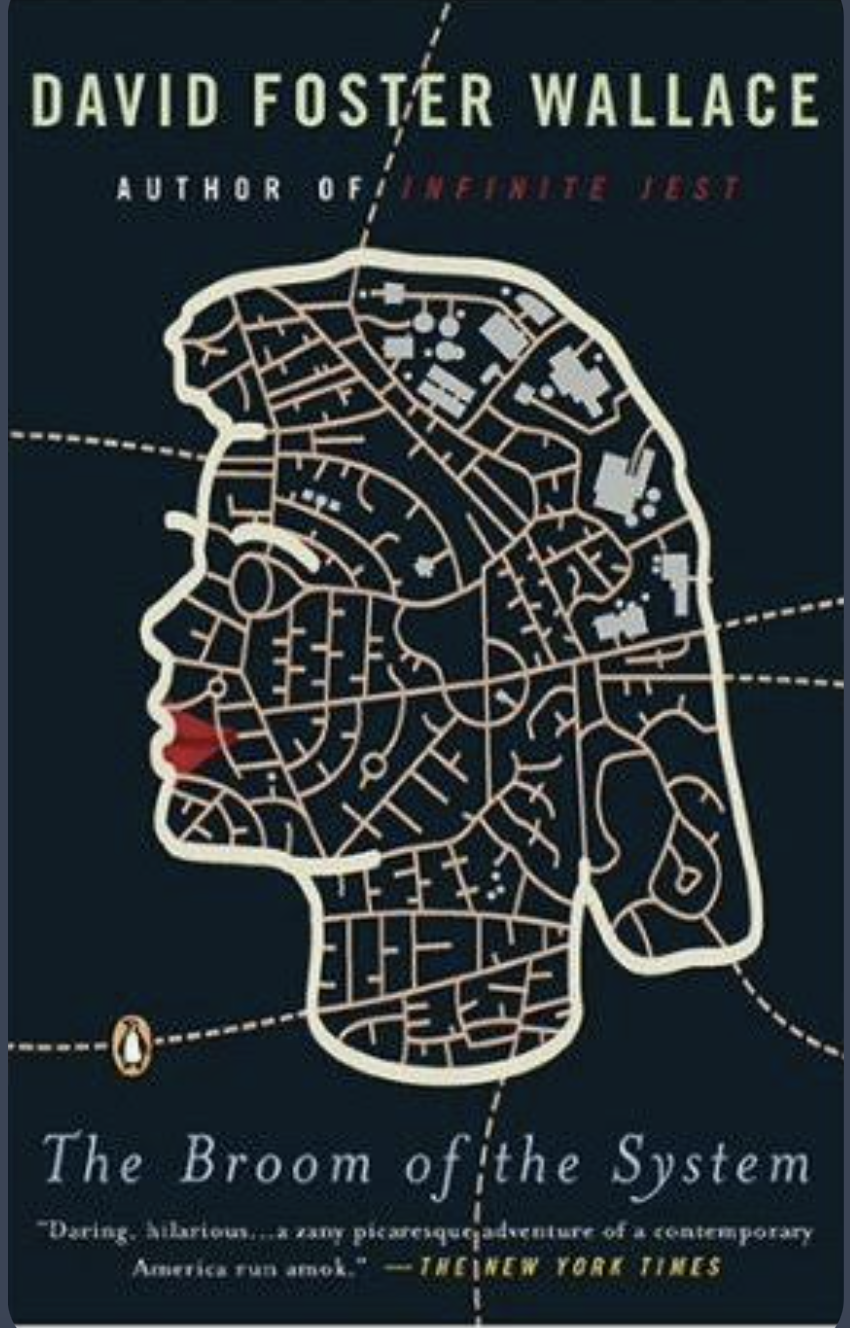
The Broom of the System (1987). David Foster Wallace’s debut novel, bursts onto the literary scene as a dazzling, hyper-intelligent performance that already signals the arrival of a major postmodern talent. Written as his senior thesis at Amherst College, the book follows Lenore Beadsman, a young woman in Cleveland whose sense of self unravels amid a swirl of eccentric characters, corporate intrigue, and philosophical wordplay. The title itself references Wittgenstein’s idea that philosophy is a broom that sweeps away linguistic confusion—yet Wallace delights in creating more delightful confusion than clarity. Stylistically, The Broom of the System is a postmodern fireworks display. Wallace juggles multiple voices, footnotes, nested stories, and linguistic games with precocious virtuosity. Influences from Pynchon, Barthelme, and Wittgenstein are evident, but the novel pulses with its own manic energy. The Great Ohio Desert, a man-made wasteland attraction, becomes a perfect metaphor for the absurd, constructed realities characters inhabit. Lenore’s fear that she exists only as a character in someone else’s story captures the era’s deep anxiety about language, identity, and narrative control. What makes the book remarkable is how it balances cerebral play with genuine emotional stakes. Beneath the metafictional hijinks lies a poignant exploration of loneliness, the search for authentic connection, and the limits of pure theory. Wallace already shows discomfort with pure deconstruction; the novel hints at a yearning for something beyond irony and linguistic solipsism—a tension that would define his later masterpiece Infinite Jest. As a first novel, The Broom of the System is both promising and fully formed. Its ambition occasionally outpaces its discipline, yet the sheer inventive joy and intellectual horsepower make it exhilarating. It stands as an essential starting point for understanding Wallace’s evolution from postmodern gamesman to a writer who sought to use those tools for sincere, empathetic ends. Witty, brainy, and strangely moving, this debut announced a voice capable of turning philosophical anxiety into exhilarating literary art.
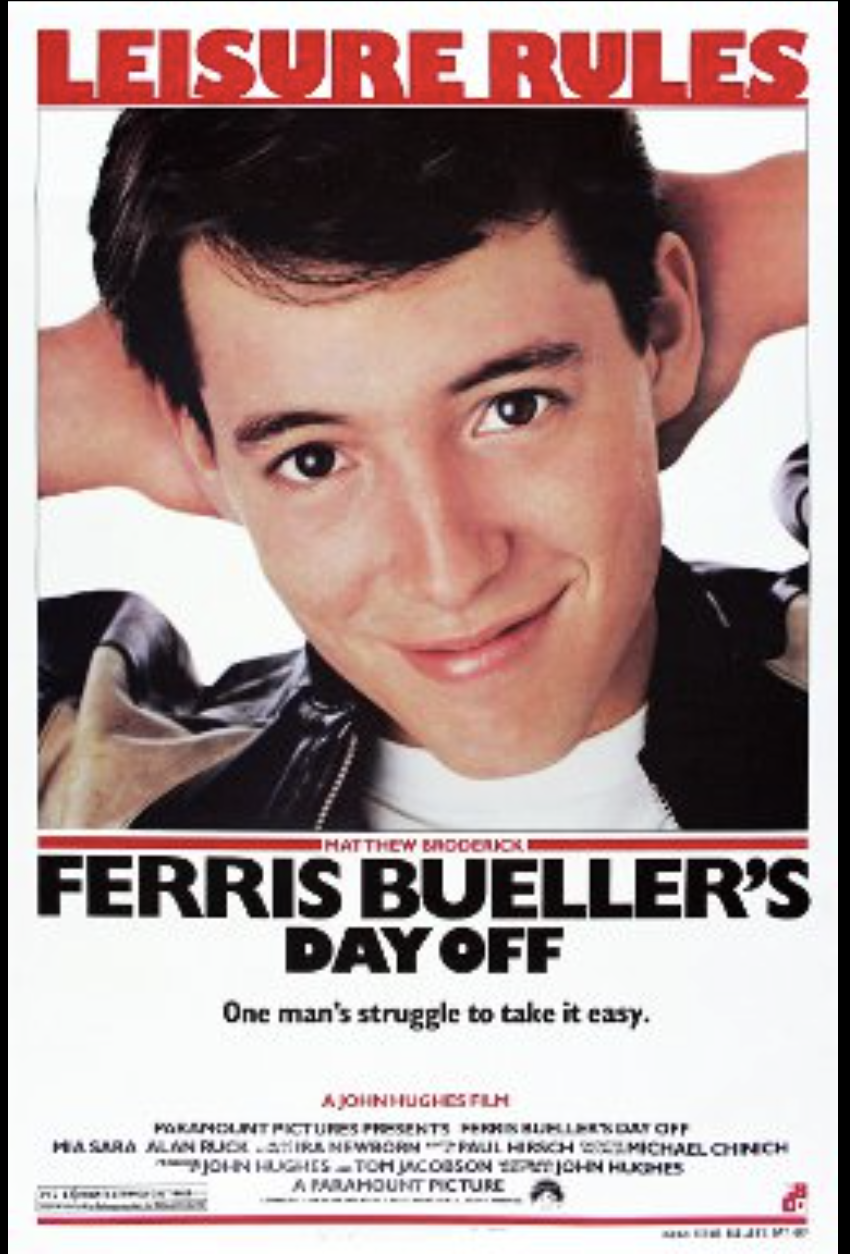
Ferris Bueller’s Day Off: Whimsy and Abandon in the Post-Industrial Age. John Hughes’ Ferris Bueller’s Day Off (1986) remains a quintessential cinematic expression of playful rebellion amid the transition to a post-industrial world. Set in suburban Chicago during the height of Reagan-era yuppie culture and deindustrialization, the film celebrates Ferris (Matthew Broderick) as a modern trickster who stages an elaborate day of hooky, turning the rigid structures of school, family, and emerging corporate life into a playground of pure whimsy and joyful abandon. Ferris embodies a liberated subjectivity perfectly suited to the post-industrial shift. As factories close and the information/service economy rises, the film suggests that creativity, charisma, and flexible performance matter more than dutiful labor. Ferris doesn’t reject the system outright; he hacks it with charm and improvisation. His famous fourth-wall-breaking monologues and orchestration of parades, art museum visits, and a Cubs game transform the city’s monumental architecture and cultural institutions—symbols of industrial-era order—into backdrops for personal theatre. The film’s anarchic energy mocks the soul-crushing conformity represented by the uptight Rooney and Ferris’s anxious friend Cameron, who eventually finds catharsis through playful destruction. Whimsy here functions as resistance and renewal. In an age of increasing abstraction—where work becomes immaterial and identity performative—Ferris models a metamodern oscillation: sincere hedonism wrapped in ironic self-awareness. He breaks rules not from nihilism but from an exuberant affirmation of life, friendship, and spontaneous experience. The film’s iconic parade scene, with its inclusive communal joy, feels like a premonition of later cultural desires for authentic connection amid mediated existence. Ferris Bueller’s Day Off captures the giddy freedom possible when industrial discipline loosens. Its enduring appeal lies in this optimistic abandon: a reminder that even within bureaucratic and economic systems, one can carve out moments of pure, creative play. In our even more accelerated post-industrial (now digital) reality, Ferris’s day off continues to inspire the subversive power of whimsy against rigidity.
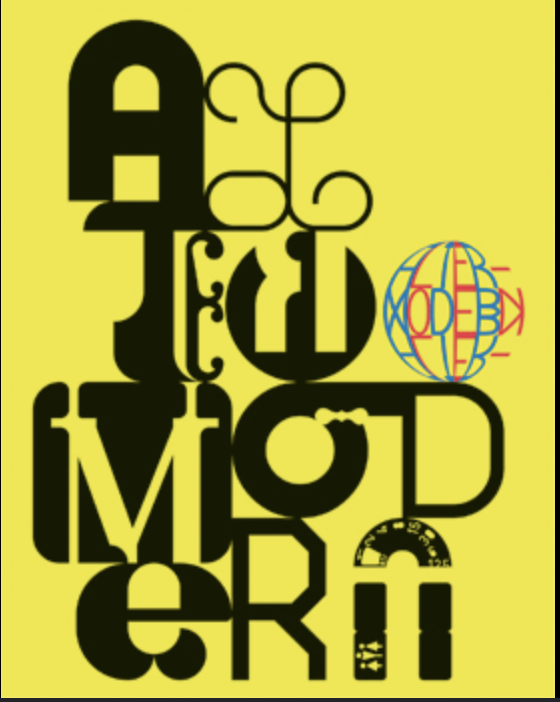
Altermodern by Nicolas Bourriaud (2009) marks a bold theoretical intervention that helped catalyze the shift beyond postmodernism. Originally developed as the conceptual framework for the Tate Triennial, the book (and accompanying exhibition catalogue) proposes “altermodern” as a new cultural paradigm: a “modernity without modernism,” shaped by globalization, digital networks, and increased human mobility. Bourriaud argues that postmodernism’s focus on deconstruction, irony, and cultural relativism has run its course. In its place emerges an alter modern sensibility defined by translation, hybridity, and nomadic exploration. At its core, altermodern art treats culture as a vast, interconnected hypertext. Artists act as semionauts—navigators who wander across geographies, histories, and media, translating and remixing signs rather than citing them ironically. Key characteristics include docufictional practices (blending fact and fiction), creolization of forms, and a renewed commitment to storytelling and meaning-making in a globalized world. Bourriaud contrasts this with both modernist universalism and postmodern fragmentation, positioning alter modernism as a constructive response to the complexities of contemporary life: standardized yet diverse, connected yet precarious. The book’s influence lies in its optimistic reframing. While acknowledging postmodern insights, Bourriaud reintroduces directionality, sincerity, and forward momentum—hallmarks of what would later be elaborated as metamodernism. Altermodern artists do not simply critique or pastiche; they build new pathways through the ruins of previous systems. The emphasis on movement, translation, and cultural dialogue feels prescient in today’s hyper-connected yet fragmented landscape. Though some critics found the term overly broad or exhibition-specific, Altermodern remains a pivotal text. It bridges late postmodern theory with emergent 21st-century practices, offering artists and thinkers a vocabulary for navigating globalisation without succumbing to homogenization or cynicism. Bourriaud’s manifesto-like energy still inspires those seeking creative alternatives to both nostalgic modernism and exhausted irony. In the ongoing evolution of cultural logics, Altermodern stands as an energetic call to keep moving, translating, and creating anew
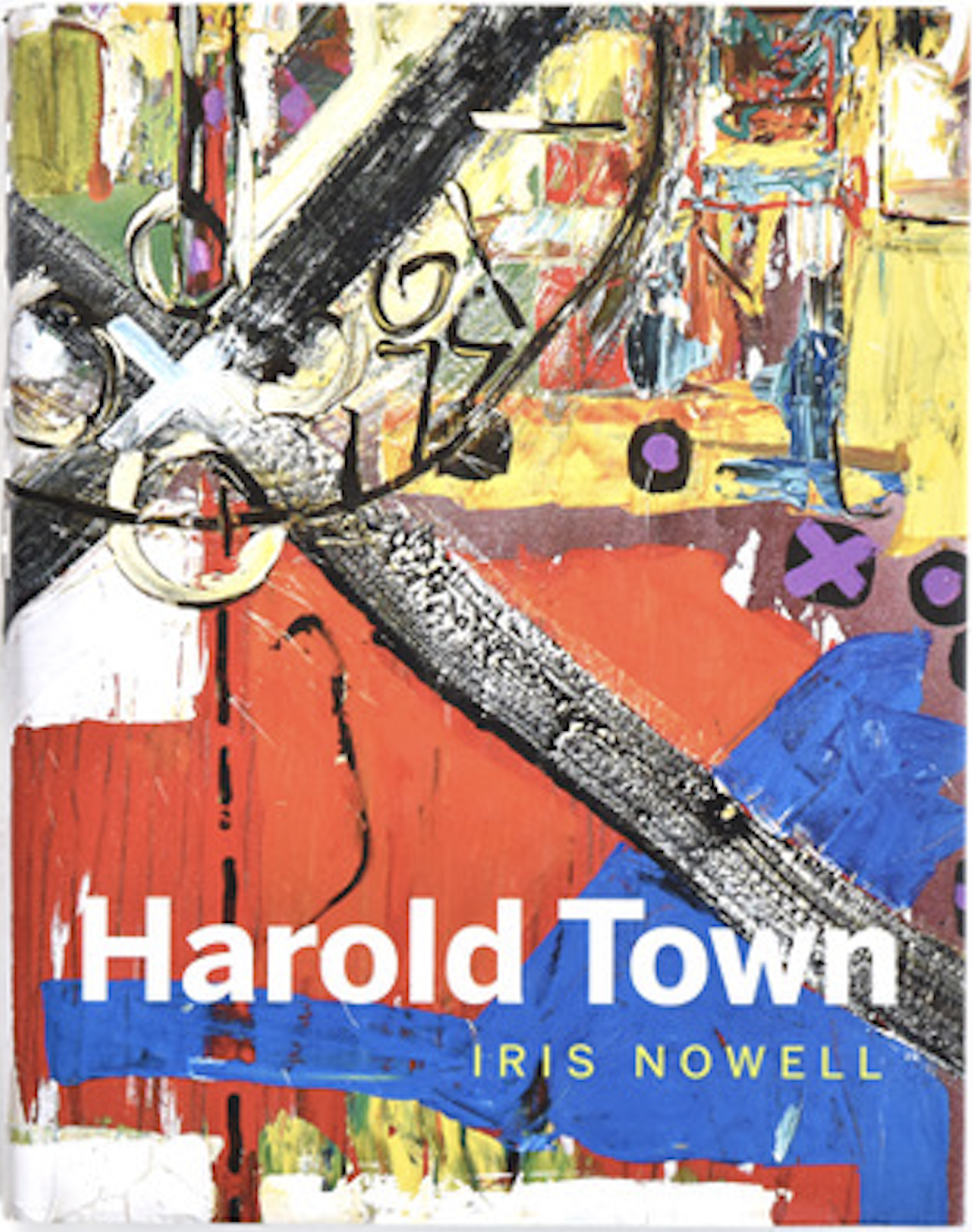
Harold Town by Iris Nowell is a vibrant, authoritative biography of one of Canada’s most brilliant, contradictory, and prolific postwar artists. Published in 2014, the book offers a richly detailed portrait of Harold Barling Town (1924–1990), the “Picasso of Canada”—a master draftsman, painter, collagist, and printmaker whose restless creativity produced thousands of works across decades. Nowell traces Town’s explosive emergence with Painters Eleven, his meteoric rise in the 1950s and ’60s, and the later phases of his career marked by both commercial success and critical neglect. Her narrative captures his flamboyant persona, technical virtuosity, and unapologetic embrace of beauty, eroticism, and popular culture. What elevates the book is Nowell’s intimate yet clear-eyed perspective. Having shared a significant part of her life with Town, she writes with insider knowledge and deep affection, while maintaining scholarly distance. The result is a lively, anecdote-filled account that humanizes the legend without diminishing his achievements. Town emerges as a larger-than-life figure: witty, ambitious, generous, and sometimes difficult—an artist who refused to be confined by any single style or movement. I had the pleasure of meeting Iris Nowell in the late 1990s. She was already a bright star in Canadian cultural circles—warm, insightful, and radiating the same intellectual energy that animates her writing. Her conversation sparkled with the same blend of personal warmth and critical acuity that makes Harold Town such an engaging read. In the broader context of Canadian art history, Nowell’s biography serves as a vital counterpoint to more strictly institutional narratives. By foregrounding the private life, studio practice, and personal networks behind the public career, it challenges the idea that abstraction’s story belongs primarily to museums and official canons. Town’s eclectic, boundary-crossing output feels especially relevant today—its exuberance and refusal of narrow categories align with metamodern openness to sincerity, ornament, and multiplicity after postmodern restraint. Harold Town is both tribute and critical achievement: a colorful, essential account of a singular artist whose work continues to dazzle and provoke.
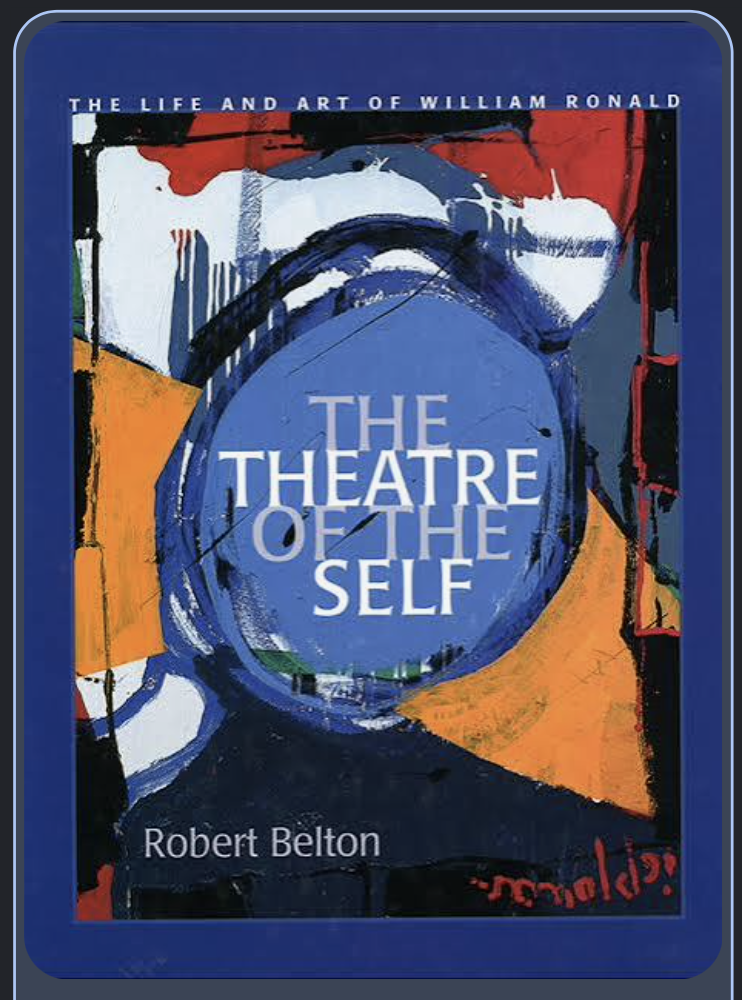
The Theatre of the Self: The Life and Art of William Ronald by Robert J. Belton is a compelling biographical and critical study that illuminates one of Canada’s most dynamic abstract painters. Published in 1999, the book explores Ronald’s larger-than-life persona, his central role in Painters Eleven, and his evolution from the raw energy of 1950s Toronto abstraction to later, more performative and psychologically charged works. Belton deftly frames Ronald’s practice as a literal “theatre of the self”—a stage where personal myth, emotional intensity, and artistic ambition collided in bold colour and gestural drama. What makes Belton’s account particularly resonant is its portrayal of renewed energy in Ronald’s later career. After periods of struggle and relative marginalization, Ronald experienced a powerful resurgence, producing work marked by fresh vitality, autobiographical depth, and unapologetic theatricality. Belton captures this “new energy” not as mere comeback but as a mature synthesis: the artist consciously performing and interrogating his own identity through paint. The book balances rigorous formal analysis with insightful psychological and cultural context, revealing how Ronald’s self-dramatization mirrored broader shifts in postwar Canadian art—from collective modernist optimism to more individualistic, expressive modes. In conversation and through the text, Belton highlights the tensions between public institutional narratives and the private, often volatile realities of an artist’s life. Ronald’s story exemplifies how personal charisma and private-sector networks (galleries, collectors, and self-promotion) could sustain a career even when official institutional support fluctuated. This perspective challenges the institutional containment seen in earlier histories of Canadian abstraction, offering instead a more human, performative view of artistic identity. The Theatre of the Self stands as an essential portrait of a pivotal figure whose work continues to inspire. It reminds us that abstraction in Canada was never merely formal—it was always theatrical, psychological, and deeply self-aware. Belton’s sensitive scholarship gives Ronald’s legacy the vivid, energetic treatment it deserves, bridging mid-century modernism with more contemporary concerns around persona, performance, and artistic self-fashioning
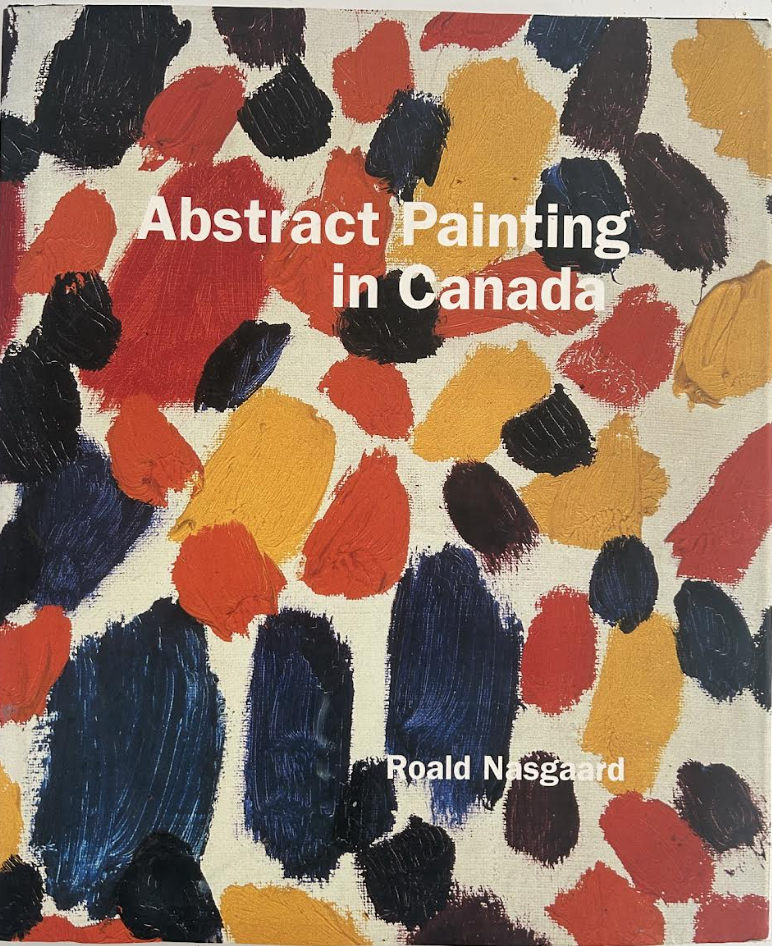
Abstract Art in Canada by Roald Nasgaard remains a powerful and foundational text in the study of Canadian modernism. Published in 2007 (with roots in earlier scholarship), the book delivers a sweeping, authoritative survey of abstract painting and sculpture from the 1950s onward. Nasgaard’s clear prose, meticulous research, and insightful formal analysis bring to life key figures and movements—Painters Eleven, the Regina Five, the Automatistes’ influence, and the later generations exploring color-field, hard-edge, and lyrical abstraction. The volume’s strength lies in its ability to weave regional stories into a coherent national narrative while respecting the distinct energies of Toronto, Montreal, Vancouver, and the Prairies. Its institutional depth makes it especially compelling. Nasgaard maps how public galleries, museums, and granting bodies shaped the visibility and validation of abstraction in Canada. During a conversation with the author, he candidly acknowledged that the book privileges public gallery culture and official institutional histories over the vibrant but less documented private sector—commercial galleries, independent collectors, artist-run initiatives, and grassroots networks. This focus, while producing a rigorous and cohesive account, effectively contains the history of Canadian abstraction within a primarily institutional frame: success measured by museum acquisition, major exhibitions, and public discourse. This approach, powerful in its time, now reads as a product of its era. In the 21st century, that institutional lens faces profound challenges. Decentralized markets, digital platforms, private patronage, and artist-driven ecosystems have democratized influence and complicated traditional hierarchies. Contemporary abstraction in Canada thrives in hybrid spaces where private initiative, international exposure, and personal narrative often outpace or bypass official channels. Nasgaard’s book thus serves as both landmark and foil: an essential record of how abstraction was canonized, yet one whose institutional emphasis invites critique and expansion. Abstract Art in Canada endures as a masterful achievement—erudite, visually sensitive, and historically generous. It provides the solid ground from which today’s more plural, metamodern perspectives on Canadian abstraction can push forward, honoring the past while embracing the fuller, messier ecology of artistic production in the present.
Art in Theory 1900–1990: A Pivotal Anthology Toward Metamodernism Art in Theory 1900–1990, edited by Charles Harrison and Paul Wood, stands as one of the most influential anthologies in modern art education. Spanning manifestos, essays, letters, and statements from artists, critics, and philosophers, it chronicles the turbulent evolution of twentieth-century art theory—from early modernism’s utopian ambitions through the fractures of the avant-garde to the skeptical pluralism of late postmodernism. Far from a neutral survey, the volume functions as a narrative machine: it exposes the shifting stories artists and theorists have told about art’s purpose, autonomy, politics, and relation to the world. Its power as a pivot to metamodernism lies precisely in this narrative exposure. By compiling primary voices in dialogue and conflict—Futurist speed, Constructivist utility, Surrealist unconscious, Abstract Expressionist authenticity, Minimalist literalism, Conceptual dematerialization, and postmodern critique—the anthology reveals modernism’s grand narratives and their subsequent deconstruction. Readers witness how each movement’s claims to truth or progress eventually unravel under internal contradictions or external pressures. Postmodern selections (e.g., from Derrida, Baudrillard, or artists like Sherrie Levine) deliver the final blows: irony, appropriation, and the death of authorship appear as logical endpoints. Yet the cumulative effect is not nihilistic closure but raw material for reconstruction. This narrative exposure performs a metamodern operation. By laying bare the succession and failure of previous logics, the book invites oscillation rather than paralysis. Readers move between earnest belief in art’s transformative potential and critical awareness of its contingencies. The anthology’s structure—chronological yet thematically porous—mirrors metamodern “both/and” sensibility: sincerity and skepticism coexist within the same historical frame. It refuses to resolve into a final master narrative while demonstrating that art theory has always been dialogic, recursive, and adaptive. In an era seeking direction beyond postmodern exhaustion, Art in Theory 1900–1990 equips practitioners to “go meta.” It provides the archive of ideas necessary for informed synthesis: not naïve return to modernist heroism, nor endless ironic quotation, but reflective navigation of cultural logics. The volume thus serves as both endpoint of a century’s theorizing and launchpad for metamodern emergence—where exposed narratives become the foundation for new, oscillating structures of meaning in art.
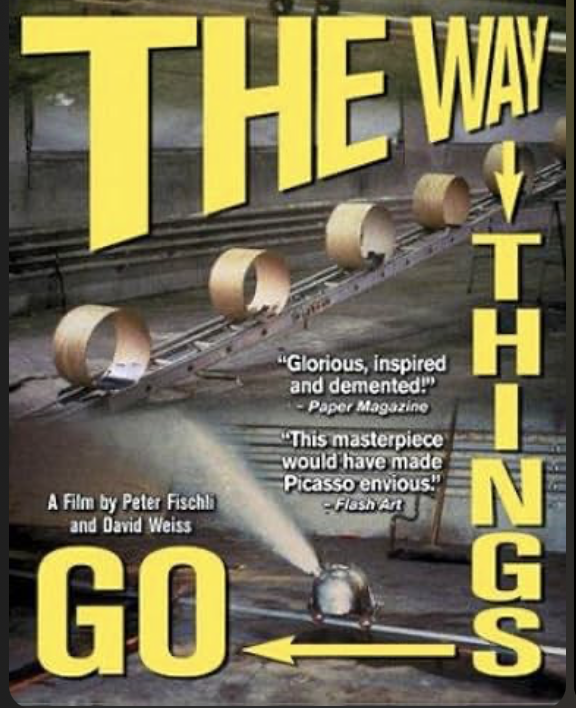
Film Review: Der Lauf der Dinge (The Way Things Go, 1987) by Peter Fischli and David Weiss Peter Fischli and David Weiss’s The Way Things Go is a thirty-minute masterpiece of absurd engineering and deadpan poetry. Shot in a stark warehouse, the film records an elaborately staged chain reaction of everyday objects—tires, bottles, foam, candles, balloons, ladders, and garbage bags—tumbling, exploding, rolling, and igniting in a hypnotic Rube Goldberg symphony of cause and effect. No humans appear; the inanimate world seems to possess mischievous agency. What begins as slapstick physics evolves into a profound meditation on entropy, contingency, and the fragile order underlying chaos. Created in 1987, the work feels strikingly contemporary. Its looping causality and post-apocalyptic whimsy prefigure internet-era attention loops and viral chain reactions. The artists’ Swiss precision meets Dada absurdity: each collision is meticulously planned yet presented as inevitable folly. Humor arises from the gap between grand mechanical drama and mundane materials. A tire rolls, ignites a fuse, inflates a bag that topples a ladder—pure kinetic theater without narrative or moral. Yet beneath the playfulness lies quiet melancholy: systems build, climax, and collapse, only to spark the next improbable sequence. In the context of cultural shifts, The Way Things Go bridges postmodern irony and metamodern sensibility. Its cool detachment and celebration of surface absurdity align with postmodern deconstruction—mocking industrial rationality and grand narratives of progress. At the same time, the film’s sincere wonder at the poetry of ordinary things and its acceptance of perpetual motion gesture toward metamodern oscillation: embracing contingency while finding delight and meaning within it. The work neither laments collapse nor promises utopia; it simply shows “the way things go”—a cyclical, precarious dance of order and disorder. Visually hypnotic and sonically rich (with added sound effects enhancing the slapstick), the film rewards repeated viewings. Its influence echoes in contemporary installation, video art, and even meme culture. Fischli and Weiss transformed the studio into a laboratory of wonder, proving that profound insight can emerge from the humblest props. The Way Things Go remains essential viewing: funny, philosophical, and endlessly generative—a quiet rebellion against taking the mechanics of existence too seriously
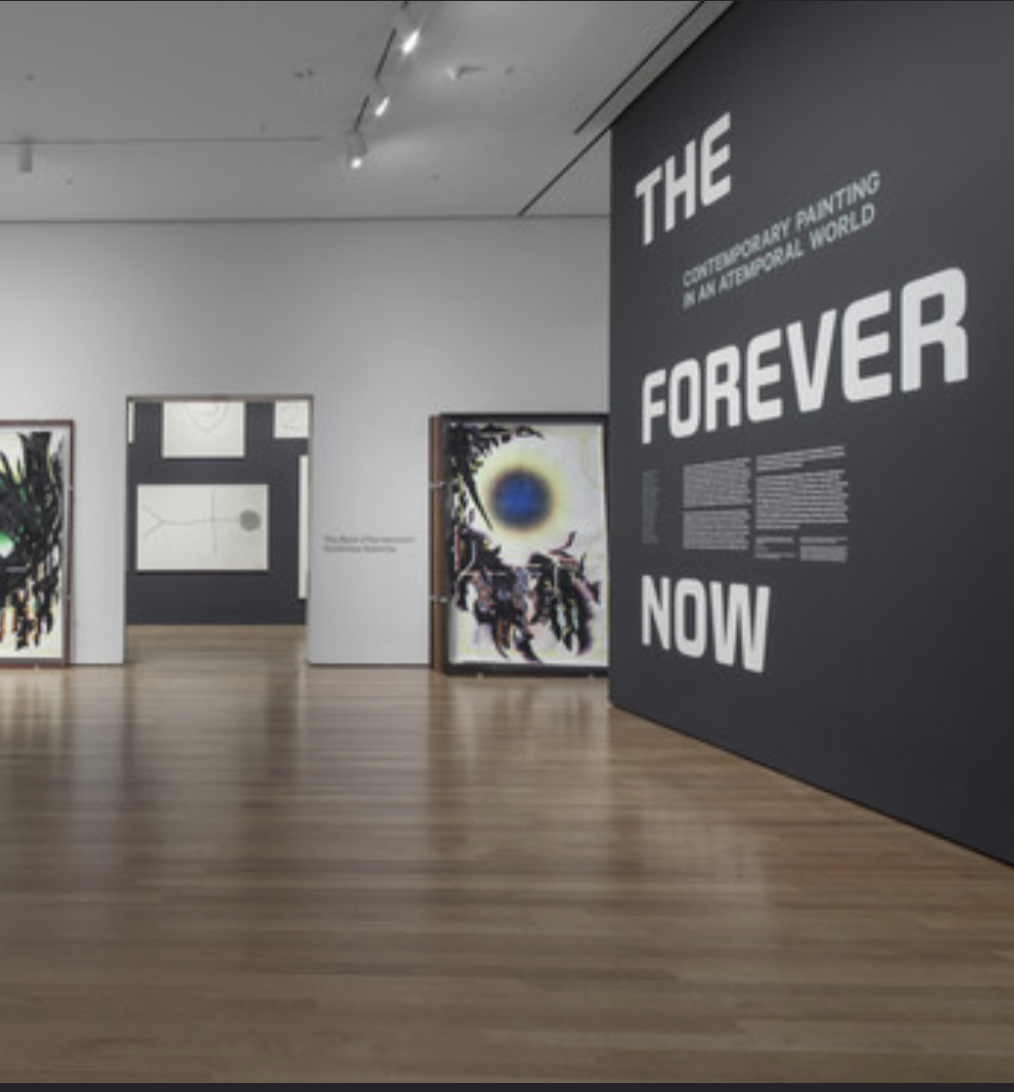
The Forever Now: Contemporary Painting in an Atemporal World (MoMA, 2014–2015) captured a pivotal tension in early 21st-century art. Curated by Laura Hoptman, the exhibition gathered seventeen painters whose work embodied the “atemporal” condition of our networked era: a flattened, promiscuous relationship to art history enabled by digital archives, Google Images, and endless scrolling. Artists such as Laura Owens, Mark Grotjahn, and Rashid Johnson treated the past not as linear progression but as an ever-present database—sampling styles, motifs, and techniques with gleeful disregard for chronology or hierarchy. The show’s thesis was clear: painting had entered a post-historical phase where “everything is available all the time.” This produced vibrant, eclectic canvases rich in citation and surface play. Yet, for all its energy, The Forever Now feels like a postmodern coping mechanism attempting to gesture toward metamodern territory. Postmodern strategies—irony, pastiche, deconstruction, and self-referentiality—dominate. History becomes a style library to raid rather than a narrative to advance or transcend. The atemporal “forever now” risks collapsing into endless recombination without clear directionality or sincere reconstruction. While the exhibition intuited the cultural shift beyond postmodern exhaustion, its approach remained largely within that paradigm: skeptical, relativistic, and more comfortable dismantling than rebuilding. In retrospect, The Forever Now marks a transitional moment. It registers the metamodern impulse—the desire to move past irony toward renewed meaning, oscillation between sincerity and critique, and engagement with complexity—yet frames it through predominantly postmodern tools. The digital deluge of images creates the conditions for metamodern oscillation, but many works stay in the ironic loop rather than leaping into generative synthesis. Trees of influence and quotation proliferate, yet the exhibition often feels more like clever navigation of the ruins than planting new seeds in fertile soil. As a document of its time, the show remains compelling for its formal ambition and cultural diagnosis. It highlights painting’s resilience in the face of atemporality while revealing the limitations of a purely postmodern lens. True metamodern practice would push further: holding the tension between deconstruction and reconstruction, using historical awareness not just to collage but to orient toward emergent possibilities. The Forever Now stands as an important bridge—vibrant, symptomatic, and ultimately transitional
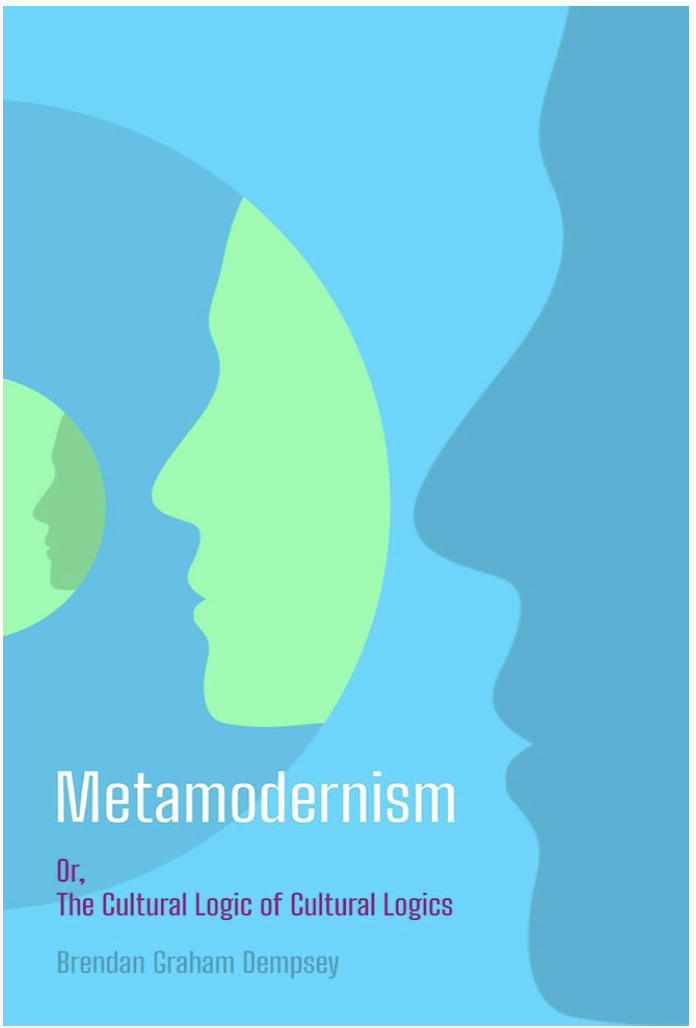
Metamodernism: Or, The Cultural Logic of Cultural Logics by Brendan Graham Dempsey is a landmark synthesis that clarifies and advances one of the most vital discourses of our time. In this accessible yet rigorous overview, Dempsey maps the diverse strands of metamodern thought—cultural, philosophical, developmental, and spiritual—revealing their underlying unity. Rather than a fleeting aesthetic or generational mood, he defines metamodernism as the cultural logic of cultural logics: a recursive, self-reflexive capacity to “go meta,” oscillating between and integrating prior paradigms without being trapped by any single one. Building on earlier articulations (notably Vermeulen and van den Akker’s 2010 essay), Dempsey shows how metamodernism radicalizes postmodernism’s irony, skepticism, and deconstruction. Where postmodernism dismantled grand narratives and exposed contingency, metamodernism reflects on that reflection itself. This produces a dynamic oscillation: sincerity through irony, reconstruction through deconstruction, directionality through relativity. It is not a return to naïve modernism but a higher-order integration—transcending and including what came before. Dempsey’s framework elegantly unites seemingly disparate voices: from cultural theorists to metatheorists, complexity thinkers, and integral philosophers. As an artist whose practice has long embodied these tensions, I found Dempsey’s work profoundly resonant. My paintings—recursive grids, luminous discs of pigment hovering between abstraction and landscape—navigate the same metamodern territory Clement’s Quantum Jump first illuminated for me decades ago. Postmodern fragmentation gave way to a felt need for earnest reconstruction; Dempsey provides the conceptual architecture. The “meta” move allows my work to hold irony and sincerity simultaneously: conceptual abstraction that still sings with emotional and environmental connection, without regressing into outdated certainties. Dempsey writes with clarity and generosity, making complex ideas available beyond academia. His book complements the Metamodern Spirituality series, addressing the meaning crisis head-on by reclaiming transcendence, myth, and purpose in a post-secular age. In a culture still wrestling with relativism’s hangover, Metamodernism offers not dogma but a flexible logic for coherence and creativity. Clement prepared the ground; Dempsey charts the territory. Together they affirm that we are not doomed to perpetual deconstruction. A new cultural logic is emerging—one that equips artists, thinkers, and citizens to build meaningfully amid complexity. Essential reading for anyone seeking orientation in the 21st century.
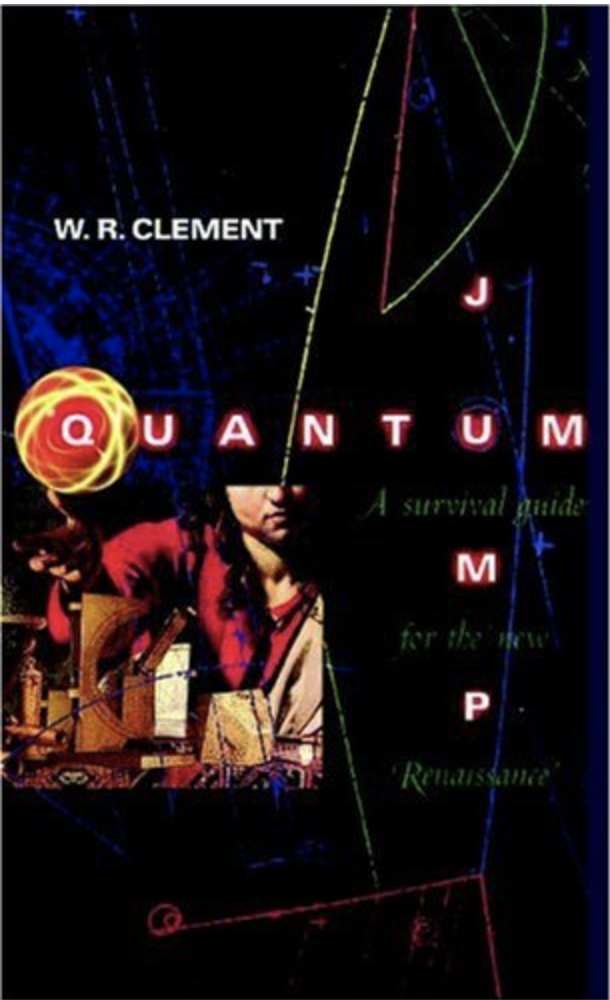
Quantum Jump: A Survival Guide for the New Renaissance by W.R. Clement stands as one of the most prescient cultural diagnostics of the late 20th century. Published in 1998, it offers a roadmap for individuals disoriented by accelerating change—the collapse of industrial certainties, the rise of cyberspace, and the profound epistemological shifts triggered by quantum mechanics. As an artist who knew Bill Clement during the years he was writing this book, I can attest to its depth: our conversations crackled with the very tangential thinking he champions, blending history, systems theory, and pragmatic survival strategies. Clement frames our era as “Renaissance 2.0.” Just as perspective, Arabic numerals, and the bill of exchange shattered medieval worldviews and birthed modernity, today’s quantum-informed technologies and global networks are propelling us into a hyperspace era of multidimensional abstraction. He dissects how old hierarchical institutions—corporations, nation-states, even linear thought itself—struggle against networked, entrepreneurial dynamism. IBM and Texas Instruments missed the PC revolution; similarly, rigid trading blocs like NAFTA risk obsolescence. His analysis of fault lines in the emerging world order feels even sharper now, amid ongoing culture wars and digital fragmentation. For me, the book’s power lies in its bridge from postmodern irony and deconstruction to something generative—what we now recognize as metamodernism. Postmodernism dismantled grand narratives and exposed power structures, leaving many in cynicism or relativism. Clement refuses nihilism. Drawing on quantum principles of superposition, observer effects, and non-locality, he urges “tangential thought”: playful, multidimensional navigation that oscillates between sincerity and skepticism, structure and flux. This helped me navigate the massive culture shift in my own practice. My paintings—blending landscape abstraction, grids echoing canvas weave, and vibrant, recursive forms—embody that oscillation. They reject pure postmodern pastiche in favor of optimistic reconstruction: material as vocabulary, color as structure, horizon lines hinting at new perceptual frontiers. Quantum Jump is dense, occasionally thesis-like, yet rewarding. Its 480+ pages reward rereading as events unfold. Bill’s friendship and this text equipped me to thrive amid uncertainty, treating cultural acceleration not as crisis but invitation. In an age still reeling from the postmodern-to-metamodern leap, it remains an essential survival guide—and a call to create boldly in the new renaissance.